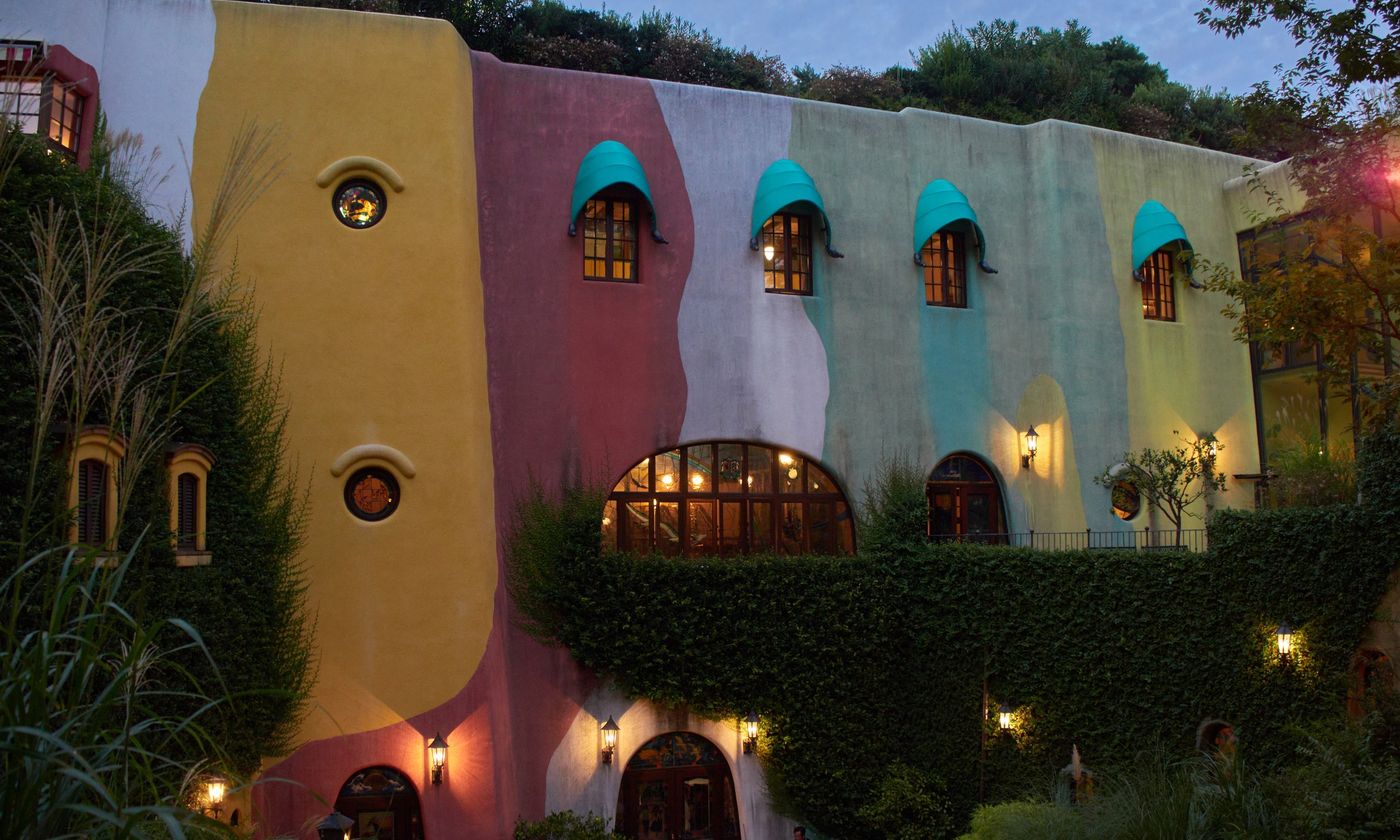
The Ghibli Museum in Mitaka is the one Tokyo attraction where turning up on the day gets you nothing. There is no ticket window at the museum. Every visitor holds a dated, timed ticket bought in advance, and if you don’t have one you don’t go in — which is worth understanding properly before you build a day around it.
The good news is that the system is fixed and predictable once you know its shape. The bad news is that the release date is a specific morning each month, and popular dates go quickly.
The release date is the thing to plan around
Tickets go on sale on the 10th of each month at 10:00 Japan time, and that release covers entry dates for the following month.
So if you’re visiting Tokyo in November, your date becomes available at 10:00 on 10 October. Not before. This is the single most useful fact in this guide, because most people discover the museum a week before their trip, by which point the dates they want are gone.
Work backwards from your travel dates, put the relevant 10th in your calendar, and be ready at 10:00 Japan time. If you’re booking from another timezone, convert it once and write it down — Japan is UTC+9 and does not observe daylight saving, so the offset from your home city may shift twice a year even though Tokyo’s clock doesn’t move.
Where you’re allowed to buy
This depends on where you live, which is unusual and catches people out.
- If you live in Japan: tickets are sold exclusively through Lawson Ticket (ローソンチケット), the convenience store chain’s ticketing service. There is no alternative official route.
- If you live overseas: the museum’s official routes are the JTB travel group or Lawson Ticket’s English-language site.
There is also a third route. Because the official channels can be awkward if you don’t read Japanese and aren’t standing near a Lawson, Klook (affiliate) (opens in a new tab) lists Ghibli Museum tickets in English alongside other Tokyo bookings. Availability there is its own inventory, so it’s worth checking as well as, not instead of, the official routes.
Do not buy from resellers
The museum states plainly that reselling tickets for profit is prohibited, and resold tickets will not admit you. Tickets are tied to the reservation, and ID that matches the name on the booking is expected.
This matters because Ghibli Museum tickets are exactly the kind of scarce item that attracts resale listings at three or four times face value. A resold ticket isn’t just overpriced — it’s void at the door, and you will have travelled to Mitaka for nothing.
What it costs
Admission is genuinely cheap, which surprises people who’ve just spent a stressful morning refreshing a booking page:
| Category | Price |
|---|---|
| Adults and university students | ¥1,000 |
| High school and middle school students | ¥700 |
| Elementary school students | ¥400 |
| Preschool children (age 4 and over) | ¥100 |
| Children under 4 | Free — no reservation needed |
There are no group discounts and no advance-purchase discounts. The price is the price.
The timed entry is softer than it sounds
There are seven entry slots: 10:00, 11:00, 12:00, 13:00, 14:00, 15:00 and 16:00. You must arrive and enter within one hour of your assigned slot.
Here’s the part that changes how you plan a wet day, though: this is not a turnover system. Once you’re in, you’re not asked to leave after a set period — you can stay until closing at 18:00.
That makes the museum a far better rainy-day option than a typical timed attraction. If you book the 10:00 or 11:00 slot on a day of solid rain, you have somewhere to be for most of the day rather than a 90-minute appointment that dumps you back outside at lunchtime.
Opening hours are 10:00–18:00, and the museum is closed every Tuesday. Additional closing dates change from year to year, so check the official calendar for your specific date.
Getting there — and the rain decision
The address is 1-1-83 Shimorenjaku, Mitaka-shi. You’ll come in on the JR Chuo Line to Mitaka Station, about 20 minutes from Shinjuku.
From there you have two options, and in bad weather they are not equal:
- Walk from the south exit: 15 minutes. Pleasant in good weather — the route follows a park path — and thoroughly unpleasant in a downpour.
- Community bus from JR Mitaka Station: every 15 minutes during opening hours. Adults ¥230 (cash or IC card); children aged 7–12 pay ¥120 in cash or ¥50 with an IC card.
On a rainy day, take the bus. A ¥230 fare to avoid arriving soaked for a timed entry you can’t rearrange is an easy trade, and the 15-minute frequency means you’re not waiting long.
What’s actually inside
The museum is small and deliberately unmapped — the official line is to wander rather than follow a route. The fixed elements worth knowing about:
- The Saturn Theater, which screens short animated films made by Studio Ghibli and shown nowhere else. The film on rotation changes periodically — at the time of writing it was Boro the Caterpillar, scheduled for 1–31 August 2026.
- TRI HAWKS, a reading room.
- The Straw Hat Café, which has a terrace.
- MAMMA AIUTO!, the museum shop.
- A temporary exhibition that changes over time — currently one built around the workspace of illustrator Yuriko Yamawaki.
Because both the short film and the special exhibition rotate, two visits a year apart are genuinely different. It also means that if you have a specific short film in mind, check what’s showing on your date before you commit to it.
One honest caveat about “indoor”
We describe a lot of Tokyo attractions here as rainy-day options, and we’re careful about the word indoor.
For the Ghibli Museum, the official pages we checked confirm the café has a terrace, and the museum is widely known for a rooftop area — but we could not confirm the rooftop garden or its extent on the museum’s own site. So: the galleries, theatre, reading room and shop are indoors and the bulk of a visit is under cover, but treat it as mostly indoors rather than fully enclosed, and don’t count on the outdoor parts in heavy rain.
The short version
- Note the 10th of the month, 10:00 Japan time, for the month before you travel.
- Buy through Lawson Ticket (in Japan), JTB or Lawson’s English site (overseas), or check Klook (affiliate) (opens in a new tab) as an English-language alternative.
- Never buy resold tickets — they don’t work.
- Book an early slot on a wet day and use the no-turnover rule.
- Take the community bus from Mitaka Station, not the 15-minute walk, if it’s raining.
For a full wet-weather day built around bookings like this one, see our rainy-day Tokyo itinerary.