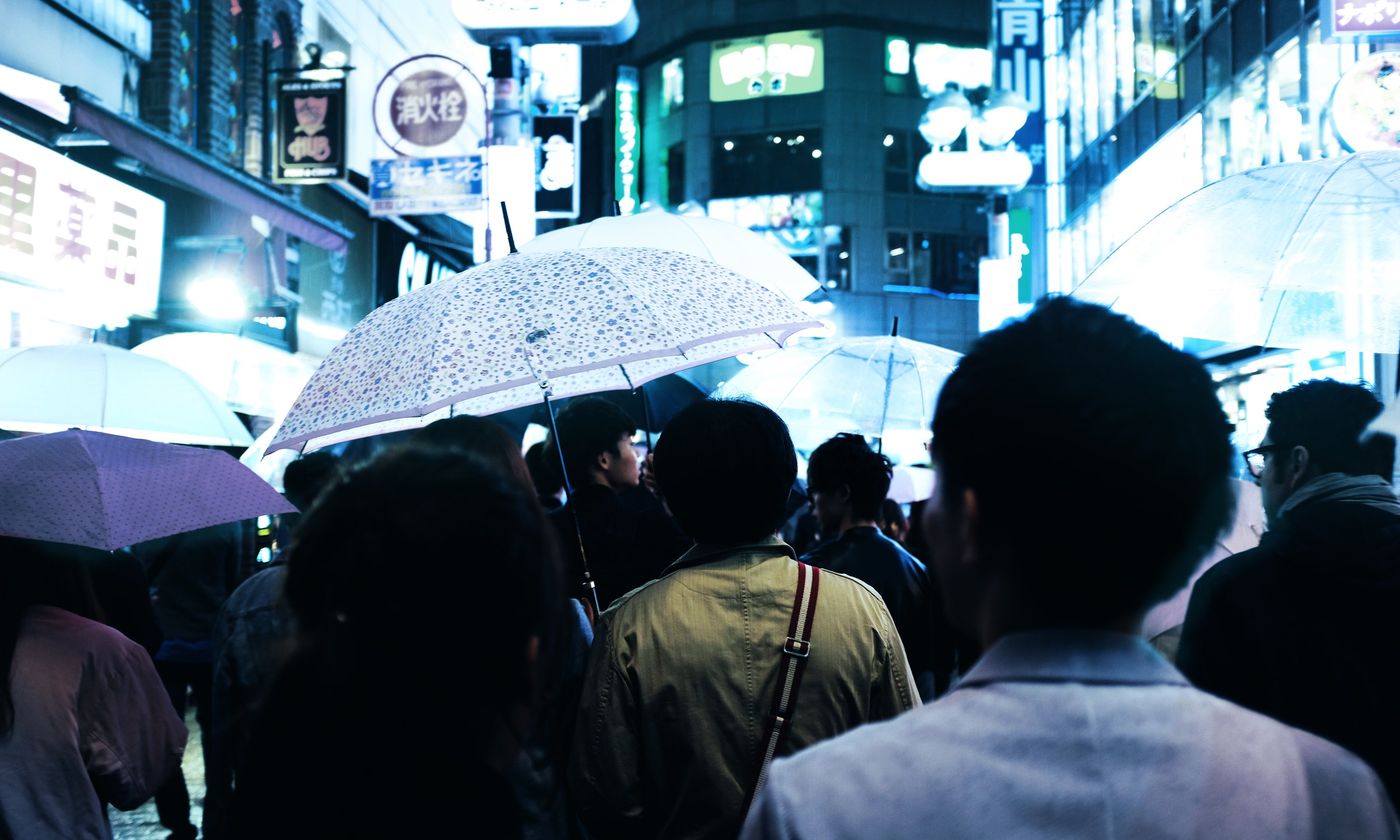
Rain in the forecast for your Tokyo trip isn’t a reason to build a backup plan. It’s a reason to build a plan that was never weather-dependent in the first place.
This is one full day, designed around three things most itineraries ignore: which venues need booking weeks ahead, which day of the week you’re doing this on, and how far you have to walk from the station in the rain.
Before you leave home
Three things, in this order.
1. Sort out data. Everything below assumes you can check the radar and rebook a slot from a doorway. Set up an eSIM before you fly — installing one requires a working connection, which is exactly what you don’t have in an arrivals hall.
2. Book the thing that can’t be booked late. If the Ghibli Museum is on your list, tickets are released on the 10th of the month before your visit, and there is no door sale. Miss that and it’s not happening on this trip. Put the date in your calendar now.
3. Check what’s closed on your day. This is the step people skip.
| Day | Closed |
|---|---|
| Monday | Tokyo National Museum, Nezu Museum, Teien Art Museum (all open if it’s a public holiday, then close the next day) |
| Tuesday | Miraikan, Ghibli Museum. Mori Art Museum opens but closes at 17:00 instead of 22:00 |
Between them, Mondays and Tuesdays account for most of Tokyo’s major indoor options. A rainy Monday with a museum-only plan is a bad day.
The day, hour by hour
10:00 — teamLab Planets, Toyosu
Start with the one that’s actively better in the rain. It’s a barefoot, walk-through-water art museum, so the weather is philosophically already priced in.
Book the first slot. Rainy weekends sell out while you’re on the train, and entry is timed.
Get off at Shin-Toyosu, one minute from the door — not Toyosu, which is ten. Bring spare socks: you go fully barefoot, socks and tights off, and the water reaches knee height on adults. Free rental shorts (XS to 6L) are available if your trousers won’t roll up.
Full detail: teamLab Planets in the rain.
12:30 — lunch, underground
Head for a depachika — a department store basement food hall. They’re fully indoors, need no reservation, and are usually connected directly to a station, which is the whole point on a wet day.
This is also your buffer. If the morning ran long, this is the hour to compress.
14:00 — Asakusa, and a booked indoor experience
Cross the city to Asakusa. From Toyosu the sensible route is the Yurakucho Line to Ginza, then the Ginza Line — and in the rain, allow appreciably more time than a route app tells you. Everything is slower when everyone is under an umbrella.
Pick one:
A beginner tea ceremony — about 90 minutes, indoors, hourly sessions from 9:00 to 18:00, and two minutes from the Tsukuba Express Asakusa exit A4. You whisk your own matcha; bamboo chairs are available if kneeling is a problem. Not suitable for children under 7.
The Samurai & Ninja Museum — armour, shuriken and sword lessons across multiple indoor floors. The basic ticket runs about an hour; the ninja and sword sessions run about two. Use Tawaramachi Station, two minutes away, rather than Asakusa, which is eight.
If you have the stamina, both fit — book them with a gap and don’t be optimistic about the gap.
17:30 — a sento
End the day the way the city does on a wet night: a neighbourhood public bath.
¥600 for an adult — a regulated rate that’s identical at every public sento in Tokyo. No booking exists to make. You arrive soaked, you get properly hot, and you leave warm, which is the one thing no museum does for you.
The Tokyo Sento Association states that sento do not discriminate against people with tattoos, though individual bathhouses set their own rules. Full sequence and etiquette: sento for first-timers.
Swap-ins for the day you actually have
If it’s Monday. Skip the museums. The teamLab Planets → Asakusa → sento spine above works, because none of it closes on Mondays.
If it’s Tuesday. Miraikan and Ghibli are out. Substitute Tokyo National Museum in Ueno for the afternoon — ¥1,000, free for under-18s and over-70s — and note its galleries are separate buildings, so keep the umbrella.
If it’s a Friday or Saturday. Tokyo National Museum stays open until 20:00, and the Mori Art Museum in Roppongi runs to 22:00. Both turn a washed-out evening into a usable one — and Mori is three minutes from Roppongi exit 1C.
If you’re travelling with children. Rebuild the day around Miraikan in Odaiba: ¥630 for adults, ¥210 for under-18s, and free for under-18s every Saturday. Ticket sales stop at 16:30 for a 17:00 close, which is earlier than you think. Then swap the tea ceremony for the Samurai & Ninja Museum, where throwing things is the point.
If you have a whole day and one destination. The Warner Bros. Studio Tour Tokyo in Nerima is two minutes from Toshimaen Station, and the operator recommends allowing three to four hours. Dates sell out, so book ahead. That’s the day, not a stop in it.
If you want quiet. The Nezu Museum (Omotesando, eight minutes) or the Teien Art Museum (Shirokanedai, six minutes) are both calm, handsome and rarely crowded. Both have famous gardens that are entirely outdoors — go for the interiors and treat the garden as a bonus if it clears. Teien sells a garden-only ticket for ¥200 if you just want somewhere to be.
What the day costs
| Item | Cost |
|---|---|
| teamLab Planets | ¥3,600+ |
| Depachika lunch | ¥1,000–2,000 |
| Tea ceremony or museum experience | varies by option |
| Sento | ¥600 |
| Transport | ¥1,000 or so |
A cheaper version of the same shape: Tokyo National Museum (¥1,000) → depachika lunch → sento (¥600) comes in under ¥3,000 for the day including transport, and requires no bookings at all.
Three rules that make any version of this work
- Last entry is not closing time. Thirty minutes before closing at Tokyo National Museum. 16:30 at Miraikan. An hour before closing at teamLab Planets.
- Book the timed things before you travel to them, not on arrival.
- Check the station, not the neighbourhood. Shin-Toyosu over Toyosu. Tawaramachi over Asakusa. It’s the difference between arriving damp and arriving defeated.
Deciding on the spot instead of planning ahead? Use the two-minute rainy-day decision guide.